


 Anmelden
Acciona Transformed Rail Infrastructure Delivery with Digital Twins and Reality Capture
When you're removing many level crossings simultaneously under live rail operation condition, every hour of downtime costs money—and every missed inspection creates risk, and unnecessary costly reworks.
Overview
To support Melbourne’s major rail infrastructure upgrade, Alex Wong, Senior Digital Engineer together with the Survey Manager Matthew Jeffery at Acciona Australia, led the adoption of Matterport digital twins across the Southern Program Alliance—helping deliver large-scale rail crossing removals and station construction. As part of a state-wide initiative to modernize aging rail infrastructure and support population growth, the program involves removing over 100 level crossings and rebuilding stations, tunnels, and surrounding assets. Faced with compressed timelines and complex coordination challenges, Acciona turned to Matterport to streamline reality capture, improve access to site data, and enable better collaboration across distributed teams.
With traditional LiDAR, daily capture during our 60-day possession of one of our sites, it was literally an impossible task. Matterport made it routine." — Alex Wong, Senior Digital Engineer, Acciona Australia
The Challenge
Capturing and communicating site conditions at scale
Infrastructure delivery teams traditionally relied on LiDAR scanning and manual photography workflows to document project progress. However, these approaches presented major challenges:
Time-intensive capture and processing - Conventional LiDAR scans could take several days to complete and process before reaching stakeholders.
Limited turnaround during critical construction windows - Daily progress capture during 60-day occupation periods proved nearly impossible using traditional methods.
Manual, fragmented workflows - Completion teams had to manually capture, catalogue, and document thousands of images to verify progress.
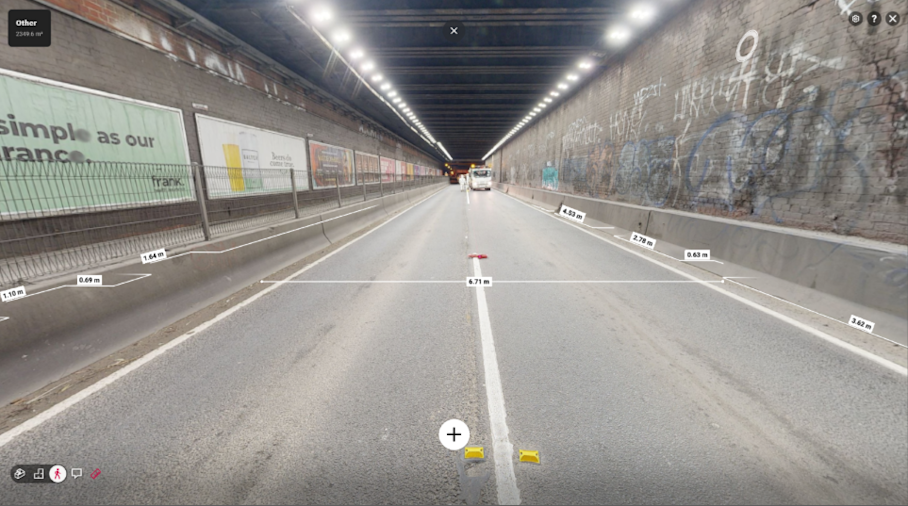
Restricted site access and safety constraints - Underground and rail environments required system shutdowns and careful coordination, limiting access for inspections and increasing risk exposure.
Low visibility for distributed stakeholders - Teams across locations, including interstate offices, lacked consistent access to site conditions without travel.
The Solution
Rapid, accessible reality capture with Matterport
Acciona deployed Matterport as part of an as-built pilot to digitize site conditions and streamline project workflows. Key capabilities included:
Fast, simplified capture - Teams captured full site environments within a single day using compact and light weight hardware and an intuitive workflow.
Cloud-based processing and delivery - Data was automatically processed and available the next day—eliminating manual post-processing efforts.
Virtual site access for stakeholders - Engineers, project managers, completion team and all other remote teams could navigate sites virtually without physical presence.
Integration with project workflows - Matterport data supported concept, tendering, construction progress monitoring, and completion verification across the project lifecycle.
3D spatial context and point cloud outputs - 360 point cloud data enabled alignment with design models and improved spatial coordination.
Key Use Cases
1. Construction Progress & Completion Matterport replaced manual photo documentation with immersive site walkthroughs, enabling completion engineers to:
Verify installation status and asset placement
Track construction stages (pre-construction, post-installation)
Close punch list items directly from digital records
This eliminated the need for manual logging and significantly simplified documentation workflows. 2. Remote Collaboration & Access Teams across Melbourne and other cities accessed site data instantly, reducing reliance on physical visits:
Engineers and stakeholders reviewed sites virtually
Distributed teams worked from a shared, consistent data set
Reduced travel time and logistical overhead
Prevented train activity disruptions via remote inspections.
3. Tendering & Pre Construciton Planning Matterport models enabled stakeholders to understand complex environments without requiring full site access:
Visualized inaccessible or restricted areas
Provided accurate spatial context for scope planning
Improved coordination across multiple contractors
4. Safety & Risk Reduction By reducing the need for physical site presence in hazardous environments, Matterport enhanced safety and minimised operational downtime every time a site visit is required:
Reduced the frequency and duration of required site visits into restricted areas that required entry approvals – saving project teams additional approval processing time
Reduced exposure to hazardous environment by remotely referencing scanned 3D spatial data of the actual site
Limited operational disruptions required for inspections
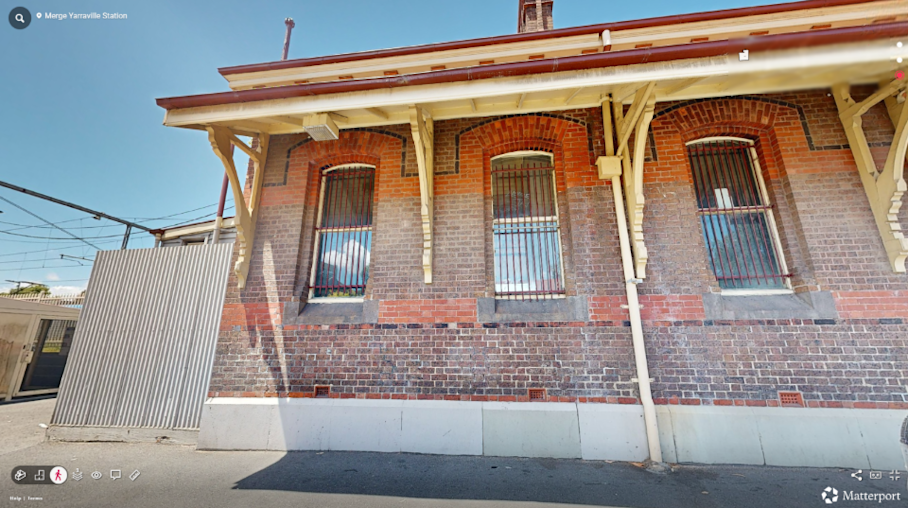
5. Historical & Compliance Documentation For heritage-listed infrastructure, Matterport captured detailed “before and after” records:
Documented existing conditions prior to construction
Enabled comparison post-completion
Supported compliance with regulatory requirements
The Impact
Measurable efficiency gains and improved decision-making
Acciona achieved significant improvements in productivity and collaboration:
60–70% faster on-site capture time for site documentation
Elimination of manual data processing, with fully automated cloud workflows
In total, up to 80% reduction in on-site capture time and workflow processing effort compared to traditional methods - from an average of 3–4 operator-days per site to under one day
In traditional workflows, documenting a single site required multiple days of scanning and additional time to process and prepare the data for stakeholder use. LiDAR-based capture typically took 2–3 days on site with one to two operators, followed by manual processing before delivery. With Matterport, the same environments could be captured within a single day using a compact and light weight device, dramatically reducing staff resources and effort. Beyond capture, the biggest shift came in processing. Previously, teams had to manually process scan data—often requiring overnight runs and monitoring and possibly delay by rework. With Matterport’s cloud-based workflow, data is automatically processed after upload, with results available the next day without any manual intervention. This combination of faster capture and zero-touch processing resulted in approximately 80% total effort savings, making even high-frequency capture (e.g., daily during 60-day possession windows) feasible. The need to capture progress repeatedly over short construction windows was a key driver for adopting Matterport. During critical construction periods, teams needed to capture progress daily over a 60-day window, something described as “literally impossible” using conventional methods due to time constraints. By simplifying the workflow:
Teams could quickly scan entire environments—including stations, tunnels, and surrounding areas—in a fraction of the time
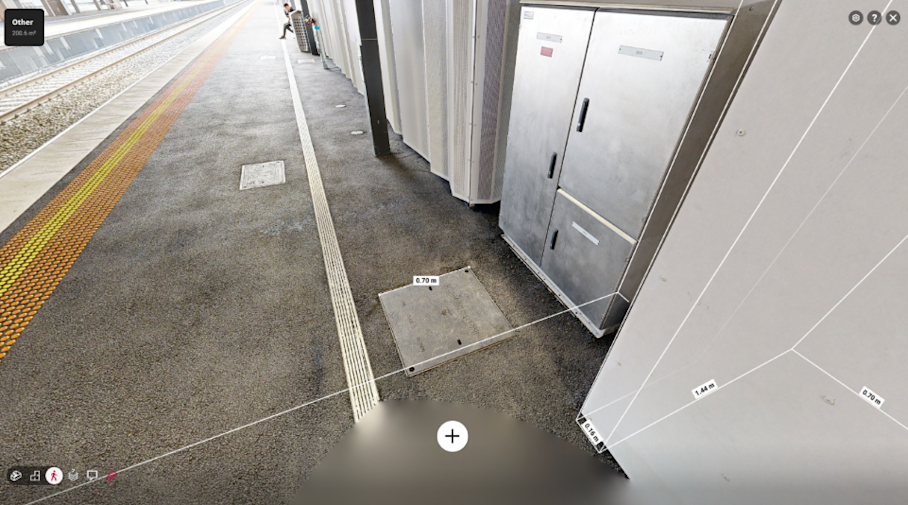
Even large sites, such as train stations with hundreds of scan points, could be captured efficiently in a single workflow
This speed enabled more frequent and consistent documentation, which in turn improved visibility across construction stages—from pre-surface works to final finishes.
Matterport fundamentally removed the need for manual data handling across both capture and consumption phases. Previously, completion engineers manually photographed assets from multiple angles, then catalogued, classified, and logged them in spreadsheets for tracking and reporting. With Matterport, all visual data is spatially captured within a single model. Teams simply navigate the environment and extract any ultra-high quality views or screenshots, with no separate cataloguing or data structuring required. Beyond efficiency, the biggest impact was qualitative:
Enables close-up inspection of assets with ultra-high-resolution views.
Improved confidence in decision-making through shared visual context
Enhanced communication across stakeholders
Greater assurance and clarity across project teams
Looking Ahead
Scaling Across the Project Lifecycle
Matterport is now embedded across multiple project phases:
Conceptual Design – Visualising site conditions and project opportunities
Tendering – Providing early-stage site visibility
Construction – Capturing progress across build stages
Completion – Supporting verification and close-out
The long-term vision is to deliver these digital assets to operators for ongoing use in maintenance and future upgrades, and getting more teams across different projects to use Matterport. Acciona and asset owner sees further opportunities to expand the use of digital twins to asset tagging and integration with their current asset management platforms.
Conclusion
For Acciona, Matterport has transformed how infrastructure projects are documented, understood, and delivered. Matterport has given us a single source of spatial truth across the entire project—something that was rarely implemented effectively. — Alex Wong, Senior Digital Engineer, Acciona Australia. By providing a single, accessible source of spatial truth, the Matterport platform enables teams to work more efficiently, collaborate more effectively, and make informed decisions with confidence—ultimately streamlining the successful delivery of complex, large-scale infrastructure programs.


