


 Sign In
Proactive Capital Planning for Assisted Living Facilities: How to Reduce Emergency Spending
Assisted living facilities and senior housing communities don't fail overnight. Operators are often managing thin margins across multiple sites where staffing and care costs dominate P&L. When capital budgets are squeezed, improvements are deferred, sometimes for years, until the building looks visibly behind.
Reactive capital spending accelerates that decline as emergency repairs crowd out planned improvements. Without strategic capital planning, aging senior living buildings fall behind modern care expectations and lose occupancy. A structured, multi-year framework helps assisted living and senior housing operators extend facility life and reduce emergency spending. It also gives leaders the documentation they need to justify investments to boards and ownership groups.
This article provides a step-by-step approach to capital planning for assisted living and senior housing. It covers where operators typically allocate capital, how to prioritize projects across a portfolio, when repositioning makes more sense than repair, and how to build a living capital record that keeps pace with facility conditions.
Where assisted living operators allocate capital investment
A significant share of the assisted living stock in the US is housed in older buildings. A lot of the sector's growth happened in the 1990s and early 2000s, so a large portion of that inventory is now 20-40 years old. Original building systems are approaching the end of useful life on overlapping timelines. Rising construction and material costs mean that work deferred five years ago now costs meaningfully more to complete.
Reactive facility maintenance creates unpredictable spending that is harder to justify to boards and lenders. Emergency repairs carry premium costs, including expedited labor, unplanned contractor mobilization, and off-cycle procurement. They also arrive without warning, making them difficult to defend in board presentations or lender conversations. A pattern of unplanned capital spend signals to ownership groups that the facility lacks operational discipline, which can affect refinancing terms and investor confidence.
Layered on top of operational needs are non-negotiable regulatory obligations. State licensing inspections, fire and life-safety codes, and infection control standards generate capital requirements that can't be deferred or negotiated away. These must be funded regardless of budget pressure.
The table below outlines the primary areas where senior housing operators allocate capital.
Investment Category | Key Systems | Planning Considerations |
|---|---|---|
Building envelope and structural systems | - Roofing - Windows - Exterior cladding - Foundations - Parking structures | - High-cost, long-cycle investments (15-30 year replacement) - Deferral compounds damage to interior finishes and mechanical systems |
MEP systems (mechanical, electrical, plumbing) | - HVAC - Boilers - Chillers - Electrical panels, plumbing risers - Elevators | - Failures directly affect resident health, comfort, and safety - The typical useful life is 15-25 years |
Fire, life-safety, and code compliance | - Sprinkler systems - Fire alarm panels - Emergency generators - ADA upgrades | - Code-mandated replacement and testing cycles should be built into the capital plan - Non-negotiable timelines |
Resident units and common areas | - Flooring - Cabinetry - Lighting - Bathrooms - Dining rooms - Activity spaces | - Operational necessities and competitive differentiators - Updates directly affect occupancy and referral rates |
Technology and cybersecurity infrastructure | - Wi-Fi networks - Nurse call systems - Access control - EHR infrastructure - Telehealth equipment | - Shortest replacement cycles of any category - Capital plans should budget for ongoing refresh rather than one-time replacement |
Effective capital planning requires operators to view these categories as an interconnected asset portfolio rather than isolated line items. For example, a roofing failure can trigger cascading damage to MEP systems, interior finishes, and resident satisfaction, severely increasing the cost of repairs.
A step-by-step capital planning workflow for senior housing teams
Building a capital plan involves documenting what exists, assessing its condition, and turning findings into a phased investment strategy. The five steps below outline a practical workflow for assisted living and senior housing operators moving from reactive maintenance to proactive capital management.
1. Document existing conditions and build an asset inventory
The first step in any capital planning process is creating a complete, accurate record of every major building system, including its age, condition, and last service date. Without this baseline, every downstream decision relies on estimates and institutional memory rather than documented facts.
Many senior housing operators work from as-built drawings that are 20 or more years old. Renovations, system replacements, and code upgrades made over the decades rarely make it back onto those plans. Outdated documentation makes it difficult to scope projects accurately or estimate costs.
Digital twins, navigable 3D replicas of physical buildings, offer a way to capture high-fidelity existing conditions across care environments. They create a permanent, accessible visual record that replaces outdated paper drawings. Matterport Capture Services provide professional technicians who document facilities consistently across a portfolio, giving decision-makers standardized building data for assessments and long-term planning.
Facilities teams add maintenance observations, asset information, and project notes as Tags within a model. This builds a centralized and searchable inventory that supports capital planning discussions with concrete, location-specific data rather than spreadsheet abstractions.
2. Estimate remaining useful life and replacement costs
Remaining useful life (RUL) is the estimated time before a system or component requires replacement. Estimating RUL accurately is the foundation of any defensible capital budget, because it determines when money needs to be spent, not just how much.
A practical approach combines three data sources:
Manufacturer specifications provide expected service life baselines.
Industry benchmarks from organizations like ASHRAE or the Building Owners and Managers Association (BOMA) add context across building types.
On-site condition assessments account for actual wear, maintenance history, and environmental factors that published data cannot capture.
Replacement cost estimates should use current construction cost data, adjusted for regional labor rates and projected inflation over the expected replacement year.
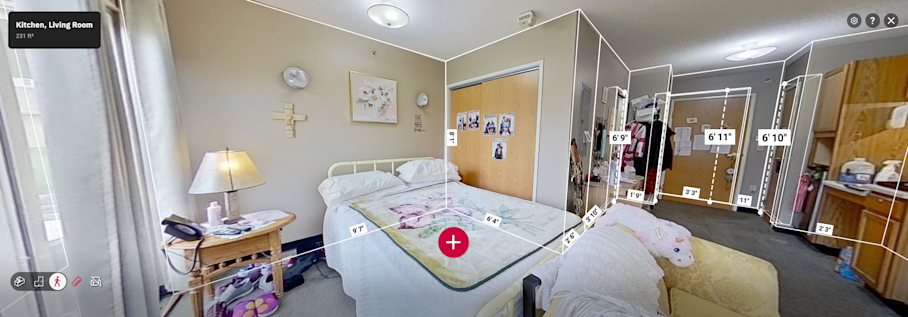
A simple asset register that tracks each system's install date, expected useful life, estimated replacement year, and projected replacement cost gives capital planners a sortable, filterable foundation for prioritization. Matterport digital twins provide Automated Measurements, so teams can capture accurate dimensions directly from the virtual space, helping estimate project costs and scope renovations without repeated on-site verification.
3. Score and prioritize capital projects
With an asset inventory and RUL estimates in hand, the next step is ranking projects against each other using a consistent framework.
A five-factor scoring model provides a structured approach that facilities leaders use to defend the budget to executive teams and boards:
Severity of failure consequences: What happens if this system fails? A generator failure during a heat wave is life-threatening. A carpet replacement is not.
Remaining useful life: Systems within two years of expected failure score higher than those with a decade remaining
Safety and compliance risk: Does the project address a cited code violation or an upcoming inspection requirement?
Resident impact: Will this project improve daily quality of life, reduce disruption, or affect occupancy?
Financial impact: What is the cost of deferral versus the cost of planned replacement?
Each factor receives a score. The combined score produces a defensible, transparent ranking that replaces subjective wish lists with data-driven prioritization.
By attaching scoring data directly to the specific assets being evaluated in a 3D model, failure consequence ratings, remaining useful life estimates, and safety flags become part of the spatial record rather than a separate spreadsheet. Facilities leaders can then customize Views to present the right level of detail to different audiences: a summary view for boards and ownership groups, and a detailed view for facilities planning sessions.
4. Build a phased multi-year capital plan
Prioritized projects need to be organized into time horizons that align with how senior housing operators actually fund and execute work. A practical structure uses three planning windows:
A 5-year near-term plan with specific project schedules and cost estimates
A 10-year mid-range plan with projected replacement timelines
A 20-year long-range plan that captures major structural and mechanical cycles
Aligning the plan with financing cycles is critical. HUD-insured properties, for example, operate on specific reserve-for-replacement schedules. Tax-exempt bond covenants may dictate minimum reserve balances. Operational constraints matter as well: major construction in an assisted living community should avoid flu season, peak move-in periods, and state survey windows when possible.
Reserving a contingency allocation of 5% to 10% of the annual capital budget for unplanned but urgent needs prevents emergency spending from derailing the plan. Without this buffer, every unexpected failure forces a re-prioritization of planned projects.
Executives, ownership groups, and board members can remotely inspect properties and evaluate renovation needs in 3D tours, reducing the need for site visits while supporting more informed capital allocation decisions. For portfolio operators managing communities across multiple states, this remote access compresses decision timelines significantly.
5. Maintain a living capital record
Capital planning should not be a once-a-year spreadsheet exercise. The most effective programs align the capital plan with an ongoing visual record of asset condition. This resource will grow more valuable with each update.
A practical recapture cadence includes three triggers:
Post-project: Every completed renovation, major repair, or system replacement triggers a fresh capture of the affected area, creating a documented before-and-after record.
Annual: A full property baseline refresh updates the facility record and identifies new deterioration.
Post-incident: Water damage, fire, or other events trigger an immediate capture of conditions before remediation begins, preserving evidence for insurance claims and capital planning adjustments.
Comparing time-stamped captures of the same space over time in Side-by-Side Spaces helps to visualize actual asset deterioration rather than relying on subjective condition ratings. This gives facilities leaders evidence rather than estimates when defending CapEx requests to boards and ownership groups.
Facilities leaders, architects, contractors, and executives can all review the same property, using Notes for virtual collaboration. This improves alignment on project priorities and budgeting decisions without requiring everyone to be on site at the same time.
When to consider renovation or repositioning
Not every capital need is a system replacement. Some investments reflect a strategic decision to reposition a senior living community for changing market conditions, shifting demographics, or evolving care delivery models.
Common repositioning triggers
Several signals indicate that an assisted living or senior housing facility may need more than maintenance investment. For example, an outdated unit mix with too many shared rooms or double-occupancy layouts limits appeal to today's residents and their families.
Obsolete skilled nursing or SNF space that no longer matches local demand ties up square footage that could serve higher-margin care models.
Shared bathrooms may not meet modern expectations and reduce competitive positioning in markets with newer supply.
A care-mix mismatch between what the building supports and what the market needs is perhaps the clearest repositioning trigger. If the community was built for independent living, but the local market now demands memory care, capital planning becomes a repositioning conversation rather than a maintenance conversation.
Repositioning often involves converting unit types or adding memory care capacity. Dining and social space upgrades, outdoor amenity expansion, and accessibility improvements are common project types. These initiatives require different planning timelines and financing approaches than system replacements.
Design updates that matter in modern senior living
Physical design has become a meaningful competitive variable in assisted living. Families evaluating communities are increasingly attuned to the built environment, not just as an aesthetic preference, but as a proxy for care quality and operational standards. Several design investments that might have been considered discretionary a decade ago now directly affect occupancy, referral relationships, and regulatory standing:
Infection control features have moved from optional upgrades to baseline expectations. Improved ventilation systems, touchless fixtures, and cleanable surfaces reduce transmission risk.
Expanded outdoor space and flexible dining layouts support the shift toward person-centered care models.
Technology infrastructure for telehealth and resident engagement platforms has become a care delivery requirement.
These updates improve both care quality and competitive positioning.
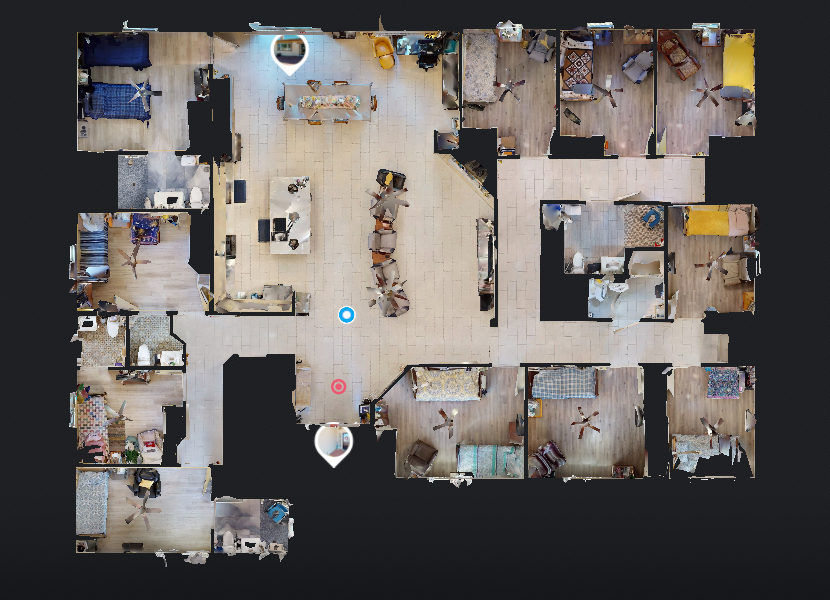
Planning these updates requires a clear picture of how the existing space is actually configured and used. Schematic Floor Plans generated from digital twins help teams evaluate space utilization, plan renovations, and estimate project requirements. For unit conversion projects or common area reconfigurations, accurate floor plans support budgeting for resident-focused improvements without additional site visits.
Better investment outcomes for senior communities
A well-executed capital plan connects facility investment to specific business results across four categories:
Resident experience: Updated units, modern common areas, and reliable building systems support occupancy rates and referral volumes. Prospective residents and their families notice the difference between a community that invests proactively and one that patches reactively.
Risk reduction: Proactive compliance and safety upgrades reduce the likelihood of citations, fines, and liability exposure. Addressing fire and life-safety systems before they fail protects both residents and the organization.
Competitive differentiation: In markets with aging supply, communities that invest strategically in design, technology, and amenities attract higher-acuity residents and command stronger rates.
Asset value: A documented, data-backed capital plan strengthens the property's position for refinancing, acquisition, or disposition. Lenders and investors respond to evidence, not projections.
A documented capital plan builds credibility with regulatory bodies during survey processes. When state inspectors see systematic maintenance records and planned improvement timelines, it signals an organization that takes compliance seriously.
Digital documentation allows operators to make data-backed decisions about repairs, replacements, and capital improvements. Presenting evidence to stakeholders rather than estimates changes the tenor of capital budget conversations and accelerates approval cycles.
Deliver better Assisted Living experiences with Matterport