


 Accedi
Corporate Property Life Cycle: Stages, Strategies & Digital Innovation
The commercial real estate market is in constant flux. As demand shifts, financing can tighten or loosen while your risk tolerance changes. Together, those forces shape when projects move forward and how much capital you commit.
Thinking in terms of the property life cycle helps teams manage that uncertainty. It frames real estate as a continuous process, not a series of disconnected handoffs.
In this article, you’ll learn what the corporate property life cycle is, how each stage affects risk and returns, and how digital tools like Matterport help teams maintain accurate, connected asset information from acquisition through exit.
What is the property life cycle?
In commercial real estate, the property life cycle describes the full span of an asset under ownership. It starts with site selection and acquisition and continues through design, construction, operations, reinvestment, and disposition. The goal is to understand how decisions made at one stage affect performance later on.
The stages themselves stay consistent, but they play out differently across asset types. Different property types move at different speeds and carry different cost and risk profiles. That shifts where you create value and where problems tend to surface.
Multifamily assets turn over quickly. Short lease terms and frequent move-ins make operations and maintenance central to performance.
Office properties follow longer cycles shaped by leases and tenant improvements. Capital decisions often cluster around lease expirations.
Industrial assets prioritize durability and efficiency. Infrastructure and system reliability matter more than finishes.
Retail properties face constant pressure to adapt. Changing consumer behavior forces more frequent refreshes and repositioning.
The property life cycle also helps you align stakeholders across stages. Investors, developers, owners, and property managers all interact with the asset at different moments and for different reasons. A shared view of the life cycle helps those groups work from the same information, reducing gaps that often lead to higher costs or missed opportunities later.
6 corporate real estate life cycle stages
Managing the property life cycle means knowing what matters at each stage and how today’s decisions affect what comes next.
In the sections below, we walk through the six core stages of the corporate real estate life cycle.
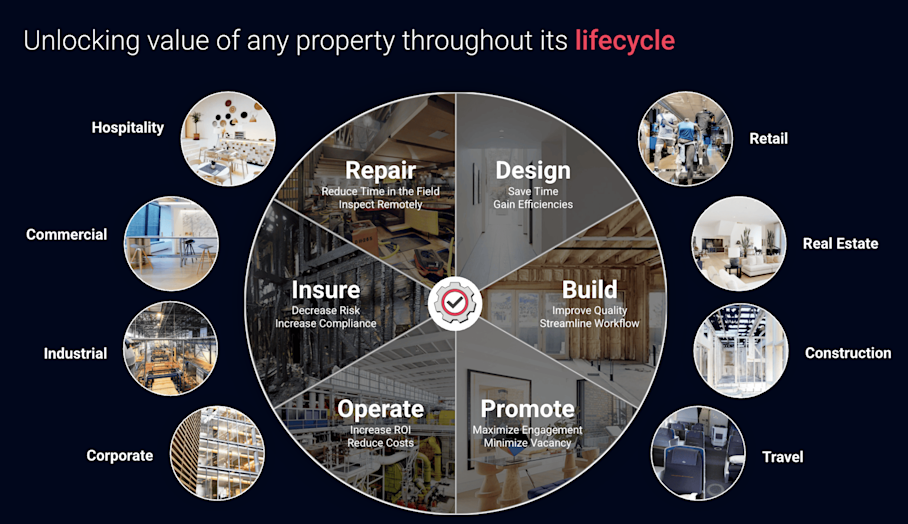
Along the way, you’ll see how digital twins support continuity by providing a consistent, accurate view of the asset as it changes. Tools like Matterport help teams document conditions, coordinate work, and carry reliable information from acquisition through operations and eventual disposition.
1. Site selection and property acquisition
The property life cycle begins with site selection and acquisition. Decisions you make at this stage set the foundation for cost structure, operational flexibility, and long-term exit options. If the assumptions are wrong here, you’ll have a hard time compensating in later phases.
Teams start by combining market research with asset-level analysis. Feasibility studies test whether demand trends intersect with the projected business case enough to hit performance requirements.
Financing decisions are closely tied to this analysis. Capital structure and hold-period assumptions must reflect the asset’s physical condition and constraints. Without clear visibility into the constraints, you risk finding limitations after closing, when capital is harder to redeploy and flexibility narrows.
Thorough due diligence reduces that risk. A comprehensive acquisition checklist typically includes:
Zoning and land-use compliance. Permitted uses, density limits, setbacks, and entitlement risks that could restrict future plans.
Structural integrity. Foundations, load-bearing elements, roof condition, and signs of deferred maintenance or past remediation.
Environmental reviews. Phase I and, when required, Phase II assessments to identify contamination, flood risk, or other liabilities.
Building systems condition. HVAC, electrical, plumbing, and life safety systems, including age, capacity, and upgrade needs.
Title and survey review. Ownership clarity, easements, encroachments, rights of way, and boundary accuracy.
Code and compliance status. Outstanding violations, accessibility requirements, and local regulatory obligations.
Capital expenditure outlook. Near- and mid-term repair or replacement needs that affect underwriting assumptions.
Using a 3D documentation software specifically built for CRE teams to digitally document existing conditions adds another layer of protection during diligence. A detailed visual record creates a shared reference point for all stakeholders. It helps surface issues that written reports or static photos often miss and forms a reusable due diligence package that carries forward with the asset.
Just as important, this documentation establishes a baseline. Teams can compare future inspections and claims against verified conditions at acquisition, maintaining continuity as the property moves through the rest of its life cycle.
2. Design and construction planning
Once a site is secured, value creation shifts from underwriting to execution. Design and construction planning turn financial assumptions into physical form, moving from early layouts through final permit approvals.
The entitlement process deserves special attention. Approvals often determine density, use, height, and setbacks, which directly affect both cost and revenue potential. Delays or late changes at this stage can cascade through schedules and budgets, making coordination early in the design process essential.
As plans evolve, teams need clear signals that the project is progressing as intended. Key metrics help surface issues before they become costly:
Entitlement and permitting timelines provide approval statuses and regulatory risk.
Design progress milestones show design development and construction documentation readiness.
Cost estimates and variance detail budgeted versus projected costs as designs mature.
Schedule adherence measures planned versus actual timelines for major phases.
Clash detection and rework potential detail constructability and coordination issues
Change order exposure explains scope changes driven by design gaps or late discoveries.
This is where dimensionally accurate digital twins begin to change how teams work together. By capturing existing conditions and layering design intent onto a precise spatial model, stakeholders can review layouts, test assumptions, and resolve issues without relying on disconnected drawings or repeated site visits.
Teams can virtually walk the space together, even when they’re not in the same location. That shared visual context supports faster decisions and tighter coordination as projects move toward construction.
3. Construction and development
Construction is the most risk-intensive stage of the property life cycle. Design assumptions meet real-world conditions and schedules start to tighten. Once work is underway, teams have limited room to correct mistakes, which makes visibility on site essential.
Most construction risk falls into a few predictable categories, each with clear mitigation strategies:
Schedule delays. Sequencing issues, late approvals, and trade coordination gaps can stall progress. Frequent progress documentation and early issue detection help teams intervene before delays cascade.
Cost overruns. Unexpected modifications often stem from design gaps or unexpected site conditions. Reducing change orders through better documentation is one of the most effective cost controls.
Supply chain disruptions. Material shortages and substitutions can ripple through the schedule. Visual tracking makes it easier to assess impact and replan quickly.
Design conflicts. Misalignment between drawings and field conditions leads to rework if issues go unnoticed. Catching conflicts early reduces downstream disruption.
At the same time, construction should prepare the asset for operations, not just completion. Teams need to collect accurate as-built documentation and validate installed systems while also ensuring safety systems perform as intended. When this work is deferred until closeout, operations teams often inherit incomplete or unreliable information.
Regular 3D captures during construction create an evolving digital record of the site as it changes. That record allows you to review progress remotely and resolve questions without relying solely on periodic site walks or static reports.
These 3D captures and the associated spatial data aren’t only useful for construction. The schematic floor plans and point clouds integrate with BIM and CAD workflows to support ongoing coordination and validation. Just as importantly, they carry forward into the next stage of the life cycle, giving property management teams an accurate, visual record of what was actually built.
4. Operations and property management
Operations and property management starts with the handoff of documentation. Property managers take over systems information and performance data created during development. That information dictates plans for daily maintenance and tenancy support, which is why completeness and accuracy are so important.
When documentation is fragmented or outdated, small issues scale quickly. Tenants start to feel the friction of slow response times and lengthy maintenance cycles. Clear, accessible information is what keeps operations predictable instead of reactive.
Digital twins support this transition by serving as a persistent operational record. Property managers can perform remote inspections, document equipment and building systems with embedded tags, and centralize maintenance history in a spatial, visual context. Teams can then review service details and coordinate work without hunting through disconnected files.
You can also use digital twins to improve the tenant experience. Virtual tours and amenity walkthroughs make onboarding easier, while visual references tied to maintenance requests help you solve tenant issues faster.
And for leasing teams, always-accessible virtual property experiences can shorten vacancy periods by giving prospects a realistic view of the space without waiting for in-person tours.
This stage of the property life cycle is the longest and most value-sensitive. The more you can use technology to create continuity in operations and management, the easier it will be to reduce friction across teams and maximize performance.
5. Insurance, maintenance, and refurbishment
Insurance, maintenance, and refurbishment combine reactive responses to unexpected events with proactive investments that keep the property competitive and compliant. Both depend on accurate, current documentation of existing conditions.
These activities fall into two broad categories.
Activity type | Purpose | Examples |
|---|---|---|
Reactive | Restore operations and manage risk after unexpected events | Insurance underwriting and renewals, damage assessment, claims documentation, loss estimation, emergency repairs |
Proactive | Preserve and extend asset value over time | Planned maintenance, system upgrades, refurbishment projects, space reconfiguration, energy-efficiency improvements |
Digital twins support both sides by providing a continuously updated visual record of the property. And the evolving set of historical scans add another layer of value.
Comparing past and current conditions helps teams plan upgrades more accurately. That comparison helps you phase work in a way that limits disruption to occupants while addressing aging systems and shifting market needs.
This before-and-after documentation is especially important for insurance and claims management.
Matterport digital twins provide verifiable records of pre- and post-event conditions. These records reduce disputes between insurers and owners while also speeding up underwriting processes. The Matterport Sketch add-on extends this capability by converting 3D captures into dimensionally accurate floor plans and loss sketches that feed directly into estimation workflows, reducing claims cycle time.
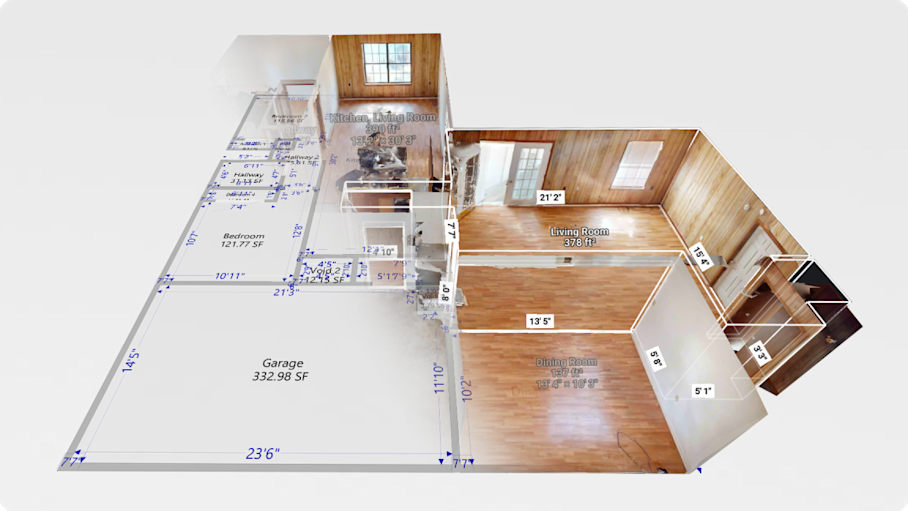
Taken together, this level of visual documentation makes insurance, maintenance, and refurbishment more controlled and predictable. Instead of reconstructing conditions after the fact, everyone works from a consistent record that supports stronger long-term asset protection.
6. Disposition and exit strategy
Disposition is where the results of life cycle management become clear. Common exit paths include straight sales, portfolio transactions, joint ventures or recapitalizations, and changes in use driven by market conditions.
Buyers assess the same fundamentals regardless of exit path. These include:
In-place cash flow
Remaining capital needs
Operational efficiency
Regulatory compliance
And documentation quality
Any gaps in these areas can and will show up as negotiation pressure. Proper preparation is key to filling gaps that could hurt valuation. But there’s a difference between traditional disposition processes and one that’s digitally enhanced.
Disposition task | Traditional approach | Digitally-enhanced approach |
|---|---|---|
Property condition review | Static reports, dated photos, site visits | Always-accessible 3D record of current conditions |
Due diligence materials | Fragmented documents shared piecemeal | Centralized, visual due diligence package |
Buyer walkthroughs | Scheduled in-person tours | On-demand virtual access for global buyers |
Risk assessment | Narrative explanations of prior issues | Verifiable visual history of repairs and upgrades |
Negotiation support | Reactive responses to buyer questions | Proactive transparency that reduces friction |
Comprehensive digital twins help you take the digitally-enhanced approach to disposition. They allow buyers to see layouts and changes over time. And they increase buyer confidence in your asset management practices. All of which aid in maximizing property valuation in negotiation.
This stage doesn’t end once a deal is made, though. Continuity also matters. Transferring digital documentation to new owners preserves the property’s operational history, from original conditions through renovations and repairs. Creating that smooth handoff will help deals close faster.
The future of property life cycle management is digital
Property life cycle management is moving away from disconnected handoffs and static records. What once lived in ad-hoc photos and siloed systems is becoming a continuous, data-rich view of the asset. That shift matters because risk and value don’t appear in a single phase. They emerge over time.
Digital twins sit at the center of this change. By combining spatial accuracy with persistent documentation, they create connected environments teams can understand and validate at every stage. Instead of rebuilding context at each transition, stakeholders work from a shared, up-to-date view of the property.
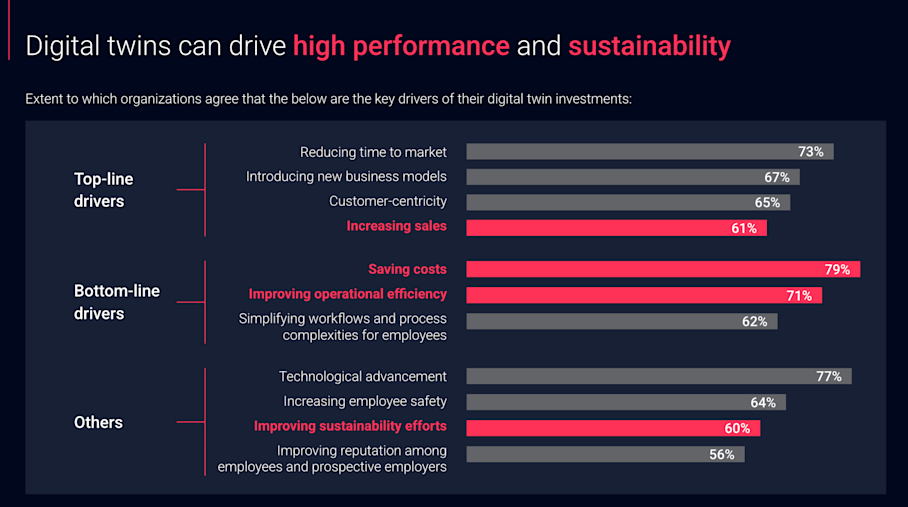
Across the life cycle, digital twins help teams:
Make better decisions using accurate, visual data
Reduce friction with a shared source of truth
Improve efficiency and lower costs through clearer documentation
Validate changes and upgrades with before-and-after records
Increase transparency during diligence and disposition
As assets grow more complex and markets less forgiving, the advantage goes to teams that can see the full picture. Digital twins connect decisions across time and help preserve value from acquisition through exit.
Get in touch with our team

