


 Sign In
Hotel Brand Standards Examples: What Leading Chains Require
Every hotel carrying a major flag operates under a detailed, legally binding set of brand standards. Hotel brand standards dictate the physical condition, operational behavior, and guest-facing presentation of the property, right down to the placement of lobby signage and even the performance thresholds of the Wi-Fi.
Brand standards vary substantially across tiers and flags in what they require, how strictly they're enforced, and what constitutes a pass versus a fail. If you're building out your own standards program, knowing what major chains specify can help. You’ll know what the competitive baseline looks like, where your property sits relative to it, and what brand standards in each category typically cover.
This guide works through the key compliance categories area by area. We’ll provide specific examples of what strong standards look like for major flags, explore where compliance most often falls short, and give tips for how to stay on top of requirements.
Guest room and bathroom standards
Guest rooms are the most heavily inspected area in any brand quality assurance visit. Deficiencies in this category affect franchise agreement standing more directly than any other because room condition drives guest satisfaction scores.
What major flags require
Room standards represent the widest variation between hotel tiers. Midscale, select-service hotels might specify more general brand standards compliance for furniture and layouts, while luxury flags often dictate custom FF&E, integrated technology, and curated design collections. The Ritz-Carlton, for example, operates against approximately 3,000 documented standards.
The table below covers some specific examples of guest room brand standards across tiers.
Brand | Key guest room and bathroom standards |
Hampton by Hilton | - Defined color palettes - Signature bedding with pillow-top mattress program - Wall-mounted TVs and functional storage units - Older-generation properties held to renovation timelines - Soft goods condition among the most frequently scored categories |
Hilton Garden Inn | - Ergonomic workspace with defined desk dimensions - Adjustable task lighting - Multiple power and USB outlets at desk and bedside - Upgraded bathroom fixture finishes - Branded toiletry partnerships with defined presentation standards |
Waldorf Astoria | - Custom-designed fittings from approved vendors - Curated artwork and accessory collections with placement specifications - Integrated room automation (motorized drapes, tablet-based controls) - Premium rooms include dedicated luggage storage to keep suitcases off carpet |
Ritz-Carlton | - Natural stone or premium tile for bathroom surfaces - Bath amenity brand partnerships with defined bottle sizes, tray materials, and arrangement - Towel gram weight minimums |
The pass/fail distinction for brand compliance in guest rooms can be sharp. The higher the tier, the stricter the condition thresholds; wear that passes at select-service may generate a finding at luxury. For example:
Stained soft goods at a midscale Hampton by Hilton property would generate an immediate finding. Even if the staining is purely cosmetic, it reflects poorly on cleanliness perception.
Inconsistency with current brand design at an upscale Marriott property could trigger a deficiency during a room inspection simply for being outdated, even if everything is functional and in good condition.
Inconsistent amenity placement or a non-compliant minibar presentation at a Ritz-Carlton property would be flagged at a threshold that would pass at a select-service tier.
How operators document room-level compliance
Guest room deficiencies are the most granular to track. A single floor of rooms can generate dozens of individual PIP line items, each tied to a specific location, condition threshold, and remediation deadline.
Traditional documentation methods struggle to keep pace with this scale. Spreadsheet-based PIP tracking lists deficiencies by room number and category, which doesn't connect those line items to the physical space in an intuitive way.
As virtual replicas of hotel spaces, digital twins provide brand compliance teams with walkable records that anyone can explore remotely from a browser. Rather than building text-based lists to document brand compliance issues in each room, inspectors can anchor findings to Tags at the relevant location within the 3D model. This keeps PIP line items connected to the space, rather than abstracted into a separate document.
Regional directors managing multiple properties also have a convenient way to review room conditions without coordinating a site visit for every open line item. Automated Measuring tools in digital twins help leaders to verify furniture clearances and fixture placement against brand-standard minimums from their desk.
Lobby, corridor, and public area standards
Public areas carry disproportionate weight in brand inspections because every guest encounters the spaces, regardless of room type. They are also the spaces most visible to brand reviewers during an arrival walkthrough, so first impressions during an inspection also often start here.
What major flags require
Lobby and corridor standards define the guest's first physical interaction with the brand. Major chains treat them as the primary expression of brand identity at the property level.
Select-service and midscale lobbies typically follow standardized, templated design programs. Luxury properties replace templates with property-specific experiential design, where finishes, art, and even scent are specified per-property and evaluated against a custom design document.
The table below covers some specific examples of brand standards for lobbies and other public areas.
Brand | Key public area standards |
Hampton by Hilton | - "Perfect Mix" lobby concept combining lounge, dining, and work areas - Defined furniture pieces and layout zones for each function - Branded design elements required across all franchised properties |
Courtyard by Marriott | - Bistro concept as the public area anchor - Specified food service equipment, counter finishes, display cases, and integrated seating in the lobby - Corridor carpet pattern and quality grade specified |
Ritz-Carlton | - Defined arrival experience sequence: door greeting, luggage handling, escort-to-desk flow Curated lobby art program with floral displays (defined arrangement sizes and vessel types) - Ambient scent program - Corridor wallcovering types, lighting fixture designs, and artwork with frame and spacing standards |
Waldorf Astoria | - Property-specific lighting design and custom furniture specifications (no templated programs) - Public area finishes evaluated against an individual design intent document |
Pass/fail examples in public areas again illustrate tier sensitivity:
Worn corridor carpet at a select-service Holiday Inn Express property would easily generate a finding because this can lead to health and safety issues on top of poor brand perception.
Outdated lobby furniture that doesn't match the current Courtyard design standard might trigger a deficiency regardless of condition.
A scuff on custom millwork at a Ritz-Carlton, which would pass at Hampton, is flagged at the luxury tier where finish condition thresholds are materially higher.
How operators assess public areas remotely
Lobby and corridor deficiencies are among the hardest to communicate remotely. Photographs only capture a single angle, but brand inspectors assess the overall arrangement, the sight lines from the entrance, the relationship between seating zones, and the condition of finishes across the full space. Additionally, unlike guest rooms, public areas usually can't be taken offline for review. Assessments often happen while guests are on site.
3D walkthroughs let corporate brand teams and regional directors navigate any property's public areas from any device, reviewing finishes, signage placement, and furniture condition against brand standards without traveling to the property. For compliance issues that don't require a formal inspection, this provides a way to assess and document the issue without disrupting operations.
Once a formal inspection has taken place, findings can be discussed within the model in Notes, so contractors and remediation teams have the spatial context they need without requiring a separate site visit to understand the scope.
Amenity, signage, and service protocol standards
Amenity and signage standards are some of the most commonly cited findings across all tiers because they're among the easiest for an auditor to observe. Service protocols are harder to inspect physically but are evaluated through mystery guest programs running alongside formal QA visits.
What major flags require
Amenity programs, signage, and service protocols collectively define the operational identity of a hotel flag. Compliance requirements range from equipment checklists at select-service brands to choreographed service sequences at luxury properties.
The table below covers specific examples of amenity, signage, and service protocol standards.
Brand | Key amenity, signage, and service standards |
Holiday Inn Express | - Fitness center equipment minimums (cardio machines, free weights, minimum floor space) - Exterior signage follows templated specifications |
Hyatt Place | - Gallery lobby concept with defined food service program and layout - World of Hyatt loyalty recognition: front-desk teams acknowledge tier status and deliver tier-appropriate amenities at check-in |
Four Seasons | - Full-service spa requirements, including minimum treatment room counts - Service delivery evaluated through unannounced mystery shop visits - Transportation standards cover house car availability and airport transfer protocols |
Ritz-Carlton | - Turndown service choreography - Scripted greeting and farewell language - Defined response time windows - Staff grooming and appearance standards - Guest recognition systems tracking individual preferences across stays |
Signage and amenity deficiencies tend to accumulate gradually: a bulb fails, an amenity gets substituted, a refresh cycle gets deferred. The following examples illustrate where inspectors might list findings in this category.
An out-of-service fitness center item with no guest-facing signage was among the deficiencies cited in a recent Marriott-flagged property inspection that resulted in a $38,000 penalty notice.
A missing or substituted amenity item at a Ritz-Carlton property would be marked. Standard in-room amenities, including Nespresso coffee makers, minibars, and plush bathrobes are individually specified, so deviation from any element constitutes a deficiency.
How operators coordinate compliance across stakeholders
Brand amenities and service compliance involves a wider range of stakeholders than any other category. Brand teams, ownership groups, contractors, and third-party operators each need visibility into a different slice of the property.
Different parties need access to different slices of the property's documentation, and traditional systems offer no way to scope that access by role.
Matterport’s Views let operators create tailored versions of the digital twin for different stakeholders. A brand inspector’s view can surface compliance-relevant spaces like gyms or spas, while an ownership view focuses on capital planning areas. Contractors see only the remediation zones scoped to their work. All views are derived from the same underlying property scan, so there is no version-control problem across stakeholders.
Back-of-house and service infrastructure standards
Without a hotel preventive maintenance program, brand compliance in service corridors, housekeeping staging areas, and laundry facilities tends to compound. Operators are often caught off guard at quality assurance visits when a cluster of back-of-house (BOH) findings surfaces, collectively representing significant remediation scope.
What major flags require
The higher the tier, the stricter the condition standards in areas guests never see. At luxury properties, back-of-house corridors are expected to approach front-of-house finish quality, and employee areas are inspected for cleanliness and presentation.
The table below covers examples of BOH and service standard compliance for specific brands.
Brand | Key back-of-house standards |
Hampton by Hilton | - Housekeeping cart models, linen stacking order, and chemical storage placement in staging areas - Shelf labeling and par stock arrangement inspected |
Courtyard by Marriott | - Laundry equipment capacity requirements (pounds-per-hour minimums) tied to room count |
Hyatt Place | - Service corridor standards: flooring type, minimum lighting levels, wall finish condition - No exposed patching or peeling paint permitted |
Unlike guest room or lobby standards, BOH pass/fail criteria are more closely aligned across tiers. This is largely because back-of-house standards are grounded in health, safety, and operational requirements that apply regardless of where a property sits in the market.
Incomplete or out-of-date preventive maintenance records are a scored deficiency at any property. Life safety and staff training records documentation must all be current and accessible at inspection. At luxury tiers, more systems often means more detail.
A disorganized housekeeping storage area generates findings at all tiers. The health and safety dimension of chemical storage and handling means this category is enforced regardless of brand tier, though at upscale and above, the organizational standard is higher and the tolerance for drift is lower.
Staff areas falling below the property's cleanliness threshold generate findings at all tiers. At luxury properties, where back-of-house areas may occasionally be accessed by guests, the condition standard is often higher.
How operators document BOH areas between formal inspections
Back-of-house areas are among the hardest to keep in an inspection-ready state because the deficiencies that accumulate there are out of the guest-facing workflow. They’re easy to overlook until an auditor arrives.
A digital twin captures back-of-house areas within the same workflow as guest-facing spaces. This gives operators a complete condition record of the full property footprint, including mechanical rooms, kitchens, housekeeping facilities, and service corridors.
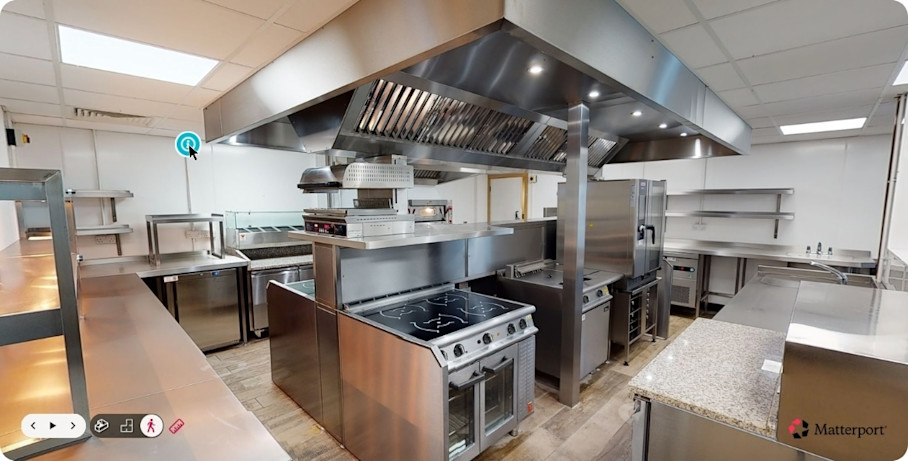
For ownership groups managing properties across multiple markets, professional Capture Services provides a way to document an entire portfolio's back-of-house areas to a consistent professional standard. Enterprise scanning is available in hundreds of cities globally, so properties can be captured by Matterport’s expert technicians and delivered within 48 hours. There’s no need for on-property staff to own or operate scanning equipment.
FF&E condition and lifecycle standards
FF&E and lifecycle standards track degradation proactively, so operators aren't surprised by PIP scope at the next cycle. This is also the brand standards category most directly tied to capital planning. Replacement schedules, condition thresholds, and design-generation requirements all translate into expenditure timelines that ownership groups must budget for years in advance.
What major flags require
FF&E and lifecycle standards vary in two ways: the length of the replacement cycle, and the degree to which brands control what gets replaced and with what. The higher the tier, the shorter the replacement schedules and the stricter the wear tolerances.
The table below covers examples of FF&E and lifecycle standards for brands at different tiers.
Brand | Key FF&E lifecycle standards |
Courtyard by Marriott | - FF&E must come from Marriott's approved vendor network - Suppliers must provide documentation for PIP compliance - Procurement outside the approved program is itself a deficiency |
Hilton Garden Inn | - Enforced replacement schedules for case goods, soft goods, and technology - Condition scoring flags fabric pilling, veneer chips, and scratched surfaces |
Ritz-Carlton | - Shorter replacement schedules and stricter condition scoring for custom FF&E - Visible wear (minor upholstery pilling, light scuffing on case goods) generates findings at this tier |
Waldorf Astoria | - FF&E evaluated against original property-specific design specification, not a universal template - Fabric wear, color fading, and finish patina tracked against the strictest tolerances of any tier |
FF&E and lifecycle deficiencies tend to be complex, with deferred replacement cycles, substitutions made outside the approved vendor program, or packages that age past the brand's condition threshold all surfacing in findings.
Soft goods replaced outside the approved vendor program at a Courtyard by Marriott property are a deficiency, even where the replacement items are in good condition and visually similar to the specified package, because the approval requirement also applies to the procurement process.
A luxury property FF&E item that deviates from the approved design brief is a deficiency by definition at Waldorf Astoria and Ritz-Carlton, where every design element is individually specified and approved.
How operators track FF&E condition between inspection cycles
Proactively tracking degradation helps to ensure operators aren't caught off guard by lifecycle deficiencies in the scope of the next PIP.
Between formal inspection cycles, FF&E degradation is largely invisible in traditional documentation systems. Spreadsheets track replacement dates and photos capture moments in time, but neither shows how the condition changes over successive months.
Comparing Side-by-Side Spaces in digital twins helps operators understand condition changes visible over time. This is useful for tracking FF&E degradation before it surfaces during a formal inspection, documenting that a flagged deficiency has been remediated, or demonstrating property conditions at the time of a franchise agreement negotiation. Timestamped records show what the property looked like at a specific point in time rather than relying on an inspector's written description.
One documentation standard for your entire portfolio
Brand standards compliance is a documentation problem as much as it is a property condition problem. As portfolio complexity grows across flags and tiers, maintaining current visibility without a consistent documentation layer becomes structurally difficult.
Operators and ownership groups that can demonstrate current conditions accurately and remotely across a portfolio have a structural advantage.
Digital twins don’t degrade between visits, and their quality doesn’t vary by who took the photos. They give brand teams a consistent and comprehensible record for reviewing standards across every property.
Get started with Matterport for Travel & Hospitality


