


 Sign In
Power Plant Outage Planning: How to Derisk Maintenance Execution
Power plant outages have a well-documented tendency to run long and cost more than planned. Industry data shows that approximately 80% of turnarounds experience budget overruns, and high-complexity events commonly see schedule overruns of 30% or more. When timelines slip, the costs compound fast: every additional day a unit stays offline can translate into hundreds of thousands of dollars in lost generation revenue, contractual penalties, or both.
The instinct is to treat these problems as execution failures, but many outage overruns have their roots earlier, sometimes months out. If the scope isn’t clearly defined or communicated at the planning phase, an overrun can be set in motion before a unit even goes offline.
This guide covers the outage planning process, from scope development and scheduling through resource alignment and contractor coordination, and outlines best practices that help power generation teams reduce surprises and deliver shorter, safer outages.
Outage planning types, timelines, and operational impact
Outage planning is the structured process of scheduling, scoping, and coordinating a planned shutdown of a generation unit for maintenance, inspections, or regulatory compliance activities. While every facility has its own maintenance philosophy and operational constraints, planned outages in power generation typically fall into a few common categories.
Outage type | Typical triggers | Average duration |
|---|---|---|
Minor outage | Routine inspections, component swaps, instrument calibrations | 1 to 2 weeks |
Major overhaul | Turbine rebuilds, boiler repairs, generator rewinds, major system upgrades | 4 to 8 weeks |
Regulatory or compliance shutdown | Mandatory inspections, emissions testing, safety system certifications | Varies by requirement |
The scale of even a minor outage is significant. A single planned shutdown can involve hundreds of work orders, multiple contractor crews, heavy equipment mobilization, and dozens of simultaneous activities running across interconnected systems.
Effective outage planning ensures that these activities are best positioned for success. It also directly protects:
Workforce safety during high-risk maintenance activities where multiple crews work in close proximity
Critical generation assets that require precise handling and sequenced maintenance procedures
Schedule control to minimize the revenue loss that accumulates with every additional day offline
Regulatory compliance to avoid penalties, fines, or extended shutdowns mandated by inspectors
Faster return to service to restore grid capacity and meet contractual generation obligations
In contrast, poor outage planning creates a cascading effect. These protections reinforce one another, so gaps in any single area tend to impact the rest. Scope gaps discovered mid-outage will trigger change orders, which extend timelines, increasing contractor costs and requiring additional resource mobilization. Rushed work under schedule pressure then introduces new safety risks that would not exist in a well-planned shutdown.
Why a remote-first model is best for power plant outage planning
Traditional outage planning relies heavily on repeated site visits. Planning activities, including scope verification, contractor walkdowns, safety reviews, and stakeholder alignment meetings, all pull people to the plant, often multiple times before the outage even begins. For facilities in remote locations or organizations managing outages across a fleet, these trips add weeks of elapsed time and significant travel expense to the planning process.
A remote-first approach moves as many of these activities off-site as possible. By using cloud-based collaboration tools and remote facility reference models like digital twins, teams can resolve many scope questions and align stakeholders on a large portion of issues before anyone sets foot in the plant.
Dimensionally accurate digital twins serve as a remote resource for a wide range of outage planning activities, including:
Scope reviews and work area assessments
Contractor onboarding and site familiarization
Safety planning and lockout/tagout (LOTO) verification
Access and egress route assessments
Equipment measurement and clearance verification
Stakeholder alignment walkthroughs
Carrying out these activities remotely frees up on-site hours for execution rather than discovery. A remote-first approach doesn’t entirely replace on-site work, but it does ensure that when teams arrive at the plant, they have already resolved the questions that would otherwise consume critical outage days.
Outage teams that invest in thorough remote pre-planning with accurate spatial data can significantly reduce outage durations and cut down on early-stage site visits. Operators in industrial and manufacturing settings have reported a 75% reduction in costs when introducing digital twins for project planning purposes. With many planning questions answered remotely, the majority of on-site hours are focused on execution.
5-step outage planning process for power plants
Every successful outage follows a structured planning lifecycle that begins months before the unit goes offline. The five steps below outline the critical phases, with guidance on where remote planning and spatial data tools fit the workflow.
Step 1: Scope development and work identification
Outage scope defines every task, inspection, and modification that will occur during the shutdown window. It is the foundation that every other planning activity builds on. Getting it right is the single most effective way to keep an outage on schedule.
A well-developed scope should account for:
Equipment condition data from monitoring systems and previous inspection reports
Maintenance backlogs and deferred work items
Inspection findings that require corrective action
Engineering modification requests and design changes
Regulatory requirements and compliance-driven activities
Each of these inputs feeds the prioritization decisions that shape the final work list.
A prioritization framework gives leadership a clear basis for scope decisions when trade-offs are necessary. Planners should categorize work into three priority tiers:
Must-do for safety-critical and compliance-driven items
Should-do for reliability improvements and deferred maintenance
Opportunistic for upgrades that reduce future outage needs
Implementing a scope freeze is essential. That means locking in the goals, deliverables, and features of a project officially. After this point, no new requirements or changes can be added without going through a formal change approval process. It should be done early to prevent scope creep, which is one of the most common causes of outage overruns. Every addition after the freeze date ripples through scheduling, resource planning, and safety documentation.
A fully developed understanding of the facility before scope finalization prevents the mid-outage surprises that drive unplanned additions. Scope reviews are often conducted remotely in a 3D walkthrough, where asset condition can be reviewed in detail and access routes can be assessed without arranging disruptive on-site inspections.
Spatial data exports from the model, such as point clouds, BIM and CAD files, support engineering analysis and integration with enterprise asset management systems for work order creation, asset record updates, and as-built documentation. This gives planners a richer, more accurate picture of facility conditions before the scope is finalized.
Locking down a well-defined scope backed by accurate, current facility data is the strongest protection against the schedule overruns that plague outage execution.
Step 2: Resource and material planning
Labor, equipment, or materials must be ready when the unit goes offline. Resource planning translates the approved scope into a detailed inventory of everything needed to execute the work.
The key components of a resource plan are covered in the following table.
Resource category | Key considerations |
|---|---|
Craft labor | Availability of qualified trades (boilermakers, pipefitters, electricians, millwrights) aligned to specific work packages |
Specialty contractors | Lead times for niche capabilities (turbine specialists, valve technicians, NDE inspectors) |
Engineering support | Structural, mechanical, and electrical engineering resources for modifications and analysis |
Vendor technical representatives | OEM support for major equipment (turbines, generators, DCS systems) |
Heavy equipment | Cranes, forklifts, and rigging equipment sized to the plant layout and lift requirements |
Scaffolding | Erection plans based on work locations, access constraints, and sequence dependencies |
Materials and spare parts | Procurement timelines for long-lead items (turbine components, transformers, specialty valves) that must be ordered months in advance |
An outage resource plan should map each category to specific work packages and schedule windows. If craft labor or specialty contractors are to be shared across multiple work fronts, the plan must also account for sequencing conflicts and prioritize allocation based on critical path dependencies.
Pre-staging heavy equipment, scaffolding, and temporary facilities requires an accurate understanding of a plant’s layout. Schematic floor plans are automatically generated from digital twins, and Automated Measurements can be captured directly inside the model, providing procurement and logistics teams with the precise dimensions and context they need to plan laydown areas, staging routes, crane pad locations, and clearance envelopes. These also assist with sizing for components or larger-scale considerations like planning crane placements that might conflict with other active work zones.
Step 3: Safety planning and operational readiness
Safety planning for an outage requires specialized operating procedures. While a plant is in a non-normal configuration, risk is elevated across multiple work zones. Systems are de-energized, isolated, and opened in ways that do not occur during normal operations, and hundreds of workers from different organizations are executing high-risk tasks simultaneously.
Key safety planning activities include:
Lockout/tagout (LOTO) planning and verification for every isolation point
Confined space entry procedures and atmospheric monitoring requirements
Hot work permits for welding, cutting, and grinding near energized or fuel-bearing systems
Fall protection requirements for elevated work on boilers, stacks, and structural steel
Hazardous energy isolation procedures covering electrical, mechanical, hydraulic, pneumatic, and thermal energy sources
Each of these activities requires documentation specific to the outage configuration, not just standard operating conditions.
Safety documentation should be prepared for every major work package, including job hazard analyses, safe work plans, and emergency response procedures specific to outage conditions. These documents must account for the non-standard plant configuration and the presence of multiple crews working in adjacent areas. Pre-outage operational readiness reviews (ORRs) should confirm that the unit is safe to take offline and that all prerequisites for maintenance activities are met.
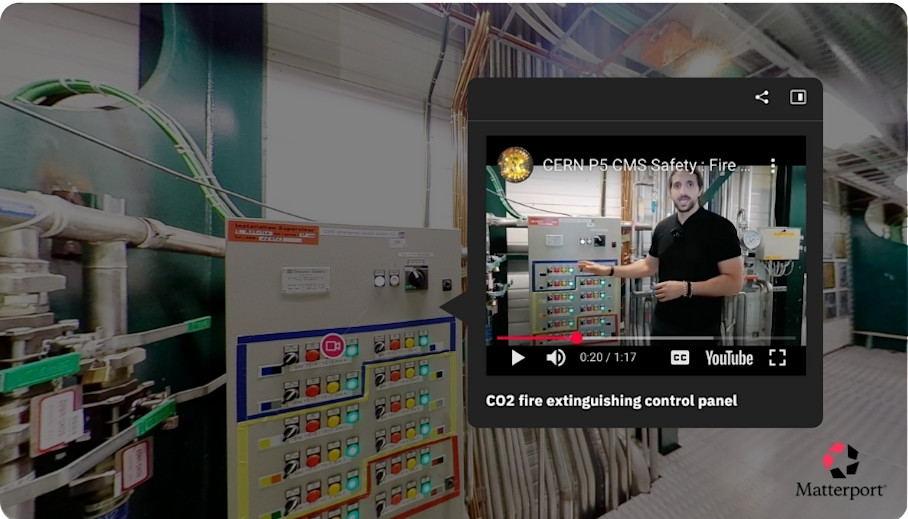
Remote safety walkthrough tools are an effective resource for outages. Building a curated Guided Tour in a digital twin helps safety teams carry out LOTO verification efficiently and safety orientation inside the model familiarizes staff with key isolation points, hazard zones, and emergency routes before the outage begins. Detailed, immersive training reduces time spent on in-person walkthroughs during the early days of a shutdown. Contractor onboarding fits naturally into this phase: external crews can complete safety orientation and site familiarization remotely before mobilizing, so their first hours on site are spent executing rather than getting their bearings.
Step 4: Scheduling and critical path management
The outage schedule translates approved scope into a sequenced execution plan with clear milestones, resource assignments, and accountability for every work package. A well-constructed schedule is the primary tool leadership uses to track progress and make fast decisions when conditions change.
Detailed outage schedules often use Critical Path Methodology (CPM) to identify the longest sequence of dependent activities that determines the minimum outage duration. Every activity on the critical path must finish on time for the outage to meet its target date. Any delay on a critical path activity extends the entire shutdown.
Integrating digital twin data with project management software helps verify that sequenced activities are physically compatible. This spatial cross-check helps catch scheduling clashes before execution begins. For example, two crews requiring the same access route at the same time, or a crane lift blocking access to an adjacent work zone, can be identified and resolved in advance.
Identifying and managing float in non-critical activities gives teams the flexibility to absorb minor delays without impacting the critical path. The following factors should all be layered in during planning:
Resource constraints
Contractor availability
Material delivery dates
Weather contingencies
A well-constructed schedule with clear critical path ownership gives leadership the visibility to make decisions fast when conditions change. That may mean reallocating resources, resequencing work, or escalating a constraint before it becomes a delay.
Step 5: Documentation, communication, and stakeholder alignment
Outage success depends on every team working from the same information and understanding the same priorities. When hundreds of people across multiple organizations execute complex, interdependent work under tight timelines, poor communication causes serious problems.
Structured communication protocols keep execution on track. Daily standup meetings, milestone reporting, schedule change notifications, and clear escalation paths ensure that issues surface quickly and reach the right decision-makers.
A comprehensive documentation package should be in place to support these protocols before the outage begins, including:
As-built drawings and equipment specifications
Work procedures and method statements for each work package
Safety plans, permits, and job hazard analyses
Contact lists for all key personnel, including contractor leads and vendor representatives
These documents form the shared reference point that keeps all teams aligned during execution.
Modern energy facilities documentation strategies embed maintenance records, safety procedures, scope details, and reference documents directly within the digital twin as Tags, Notes and Attachments at the specific equipment locations where they apply. This spatial context means every stakeholder can find the information they need without searching through file systems or email threads. It also creates a living record of scope decisions tied to physical locations.
External stakeholder communication is equally important. Grid operators, regulators, and fuel suppliers need advance notice of outage timing and duration. Customizable Views and permission controls for shared digital twins provide different audiences, from contractor crews to management to regulatory inspectors, with the most suitable context for their workflows.
With every team working from the same current information, tied to the same physical context, the outage is far less likely to be derailed by a miscommunication that planning should have prevented.
Best practices for derisking outage execution
Outage risk is often a planning problem before it’s an execution problem. Execution teams can only perform as well as the plan they are given. Investing in thorough scope development, stakeholder alignment, and accurate facility documentation delivers shorter, safer outages.
The following best practices help outage teams build that stronger foundation:
Freeze scope early. Establish a firm scope freeze date and enforce a change control process for any additions after that date. Digital twins give planners the spatial visibility they need to finalize scope with confidence, reducing late-stage additions that destabilize the schedule.
Maintain accurate and current facility documentation. Outdated drawings and specifications are a leading cause of scope surprises. Capture a current digital twin of the facility before each planning cycle to create a verified spatial baseline that every team can reference.
Update after every outage cycle. Post-outage scans capture the as-left condition of the plant, preserving a record of completed work, modifications, and any changes made during execution. This updated model becomes the starting point for the next outage planning cycle.
Conduct tabletop outage rehearsals. Walk through the entire outage schedule in a digital twin with key stakeholders before execution begins. These rehearsals surface sequencing conflicts, access constraints, and coordination gaps that are difficult to identify in a spreadsheet or Gantt chart.
Consistent application of these practices compounds over multiple outage cycles, building institutional knowledge that makes each successive outage more predictable.
A remote-first planning approach supported by digital twins gives outage teams the visibility and coordination they need to resolve questions before the unit goes offline.
Explore Matterport for Utilities teams