


 Sign In
6 Ways to Reduce Change Orders in Construction Projects
Every construction project carries the risk of change orders, and most teams have felt the impact firsthand: blown budgets, delayed timelines, and strained relationships with owners and trades.
What makes change orders so frustrating is that the majority trace back to preventable problems. Incomplete documentation, unclear scope, misaligned expectations, and poor coordination between stakeholders account for the bulk of avoidable field changes. Teams that resolve those issues before breaking ground see dramatically fewer surprises in the field.
This guide covers the most common root causes of scope adjustments and six actionable strategies that help to reduce change orders in construction projects.
What change orders really cost and why they keep happening
A change order is rarely just a line item. When a single change hits a commercial construction project, it hits scope, budget, and schedule all three at once, and the damage multiplies from there.
Take a straightforward example: a wall location shifts by a few feet during framing. That change triggers a revised structural drawing, a resequenced MEP rough-in, a procurement delay on ductwork that was already fabricated to spec, and an electrician crew that shows up on schedule to a space that isn't ready for them. Idle crews bill time and rescheduled trades often stack up into one window.
Most teams undercount the full exposure, which can include:
Re-inspection fees after modified work get lost in project accounting
Back-charges and claims processing
Administrative overhead for revised submittals, updated RFIs, negotiation time
Reduced future project awards due to erosion of owner trust
These impacts are significant, but they're symptoms. The same root causes appear across project types and delivery methods with frustrating consistency.
Common reasons for change orders in construction include:
Incomplete existing-conditions documentation leaves teams designing against unverified field reality
Design errors, omissions, and clashes surface in the field instead of during review
Unclear scope definitions turn ambiguous assumptions into formal change events
Late owner decisions reflect expectations never aligned with the design before construction began
Coordination breakdowns between owners, GCs, subs, and designers are usually information failures, not relationship ones
Managing change orders is possible, but preventing them in the first place is vastly preferable. Each of these root causes points to specific prevention opportunities.
6 strategies to reduce change orders from preconstruction to closeout
The following strategies provide a practical framework for how to reduce change orders from preconstruction through closeout. They address change order triggers in the order they typically appear in a project lifecycle.
1. Start with accurate, complete existing-conditions documentation
Inaccurate or outdated as-builts are the single largest source of preventable construction change orders. Baseline documentation that does not reflect what actually exists on site impacts every downstream decision. It can trigger RFIs, rework orders, and field changes that could have been avoided.
The fix is getting conditions right before design begins and keeping them accessible throughout preconstruction. A reliable existing-conditions dataset should include:
Verified dimensions
Floor plans
Above-ceiling and below-floor infrastructure
MEP routing
Structural elements
These inputs represent everything a design team needs to model confidently. Including them helps to uncover potential gaps before materials have been ordered and labor has been scheduled.
Teams increasingly use digital twin technology to capture dimensionally accurate site records. These 3D site models provide design-ready outputs for as-built documentation, including:
These outputs reduce manual translation, where measurement error typically enters the process. KUOP Design reduced change orders to near zero and cut as-built drawing time by 50% after adopting Matterport digital twins.
Matterport scans meet LOD 200 specifications for structural and architectural elements, providing a dependable baseline for as-built modeling. Projects that have existing laser scan data from higher-spec surveys can bring existing scan files into a Matterport digital twin by using the Point Cloud Import function. This combines survey-grade accuracy with immersive visualization, allowing teams to validate existing conditions without re-scanning the site.
With a verified baseline to build on, design assumptions reflect reality before they're committed to construction documents. This results in fewer surprises and fewer change orders when the project goes to construction.
2. Tighten scope and contract clarity before breaking ground
Vague scope definitions create the gray areas where change orders are born. Ambiguity can become a potential dispute once work begins, so contracts must clearly spell out what is included and what is not. The more assumptions that go undocumented, the more opportunities exist for different parties to interpret the same scope in different ways.
Every scope of work should make the following elements explicit:
Assumptions and exclusions that define the boundaries of the work
Allowances with clear criteria for when adjustments trigger a change order
Measurement tolerances that establish acceptable variance thresholds
Responsible parties for each deliverable, with named contacts
Documentation standards that specify what records each party must produce and when
Change order procedures with defined pricing mechanisms for out-of-scope work
Escalation paths that clarify who approves changes at each dollar threshold
These elements set measurable boundaries that reduce subjective interpretation during construction.
Contract terms should also specify how disputes over existing conditions will be resolved. Clear language around site verification responsibilities and the baseline documentation standard reduces the likelihood of "unforeseen condition" claims after mobilization.
One effective approach is to use visual documentation as a scope reference. Attaching a digital twin to the contract package establishes an agreed-upon starting point and removes subjective interpretation of existing conditions. Every party sees exactly what was there before work started, which makes scope boundaries easier to enforce and disputes faster to resolve.
3. Run a visual preconstruction sign-off process
One of the most expensive categories of change orders is late owner or client changes after procurement or installation has already started because imagined layouts or finishes sometimes do not work when seen in context. Late-stage reversals are especially costly because materials have been ordered and trades have been scheduled, so rework affects multiple downstream sequences.
A structured visual sign-off process prevents these changes by surfacing objections and misunderstandings before procurement begins. Here is the step-by-step approach:
Capture the site with a digital twin before design finalization to establish the spatial context for all review conversations. Digital twins can be integrated with Autodesk software like Revit or Navisworks to superimpose new designs over the existing conditions. This helps catch clashes before they reach the field and prevents design-related change orders.
Walk all stakeholders through the project using an immersive remote walkthrough rather than 2D drawings alone. Discuss layout, finishes, access points, constraints, and scope in spatial context.
Tag specific locations with clarifications, spec references, and responsibility assignments so every decision is pinned to the exact area it affects.
Use Notes to facilitate threaded discussion within the digital twin, resolving open questions before they become formal RFIs.
Conduct a guided review session where stakeholders formally confirm scope, layout, and finish selections inside the digital twin.
Document the sign-off with timestamped annotations that record what was approved.
This process reduces late owner changes by making the project tangible before any materials are ordered. When stakeholders experience the design in an immersive format rather than interpreting flat drawings, they catch issues early and give informed approvals that they are far less likely to reverse later.
4. Strengthen coordination between project stakeholders
Coordination breakdowns between owners, architects, general contractors, and subcontractors are one of the most persistent reasons for change orders in construction. When teams work from various document versions, communicate through disconnected email threads, and interpret flat markups differently, misunderstandings multiply.
Practical coordination improvements start with three fundamentals that keep every party working from the same information.
Establish a single source of truth that all parties reference, rather than emailing PDFs back and forth between teams.
Define who owns each decision and set response deadlines for RFIs and submittals so open questions do not stall field work.
Schedule coordination reviews at each milestone transition, not just at project kickoff, so alignment stays current as conditions change.
Matterport's Procore integration links RFIs, observations, and coordination issues directly to locations within the digital twin. Every stakeholder sees the exact area in question in full 3D context rather than interpreting 2D markups differently. Construction firm B.R. and Co. combined Matterport and Procore across their projects, leading to 75% of issues resolved independently without escalation to change orders.
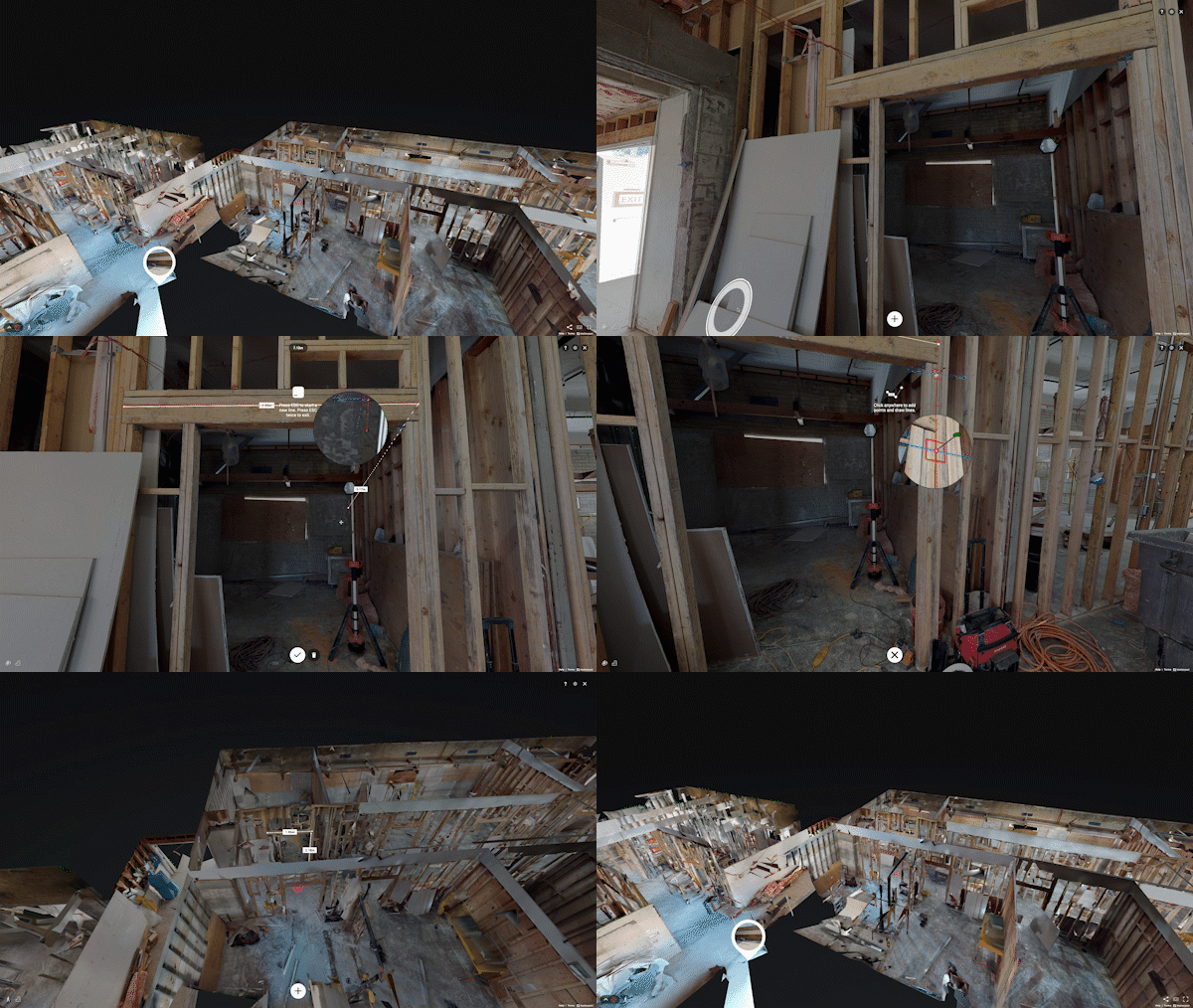
Targeted visibility reduces information overload and keeps each team focused on their responsibilities. Project managers can curate what each stakeholder group sees as different Views of the digital twin. Subcontractors see only the areas and annotations relevant to their scope, while owners can explore progress summaries without the noise of trade-level detail.
When coordination happens inside a centralized hub rather than across disconnected channels and flat drawings, misinterpretation drops and decisions happen faster, reducing change orders.
5. Build milestone-based QA/QC checkpoints into every project
A repeatable review cadence catches deviations before they compound into change orders. Instead of discovering problems during a final walkthrough when fixes are expensive, milestone-based quality assurance and control (QA & QC) creates multiple opportunities to course-correct while changes are still simple and affordable.
The following review points align with the phases where deviations most commonly occur.
Milestone | Purpose |
Existing conditions | Establish the accurate baseline before design begins |
Rough-in (framing and MEP) | Document what is behind the walls before they close up, creating an as-built record that prevents post-close surprises |
Above-ceiling | Capture infrastructure routing before ceiling installation locks it away from visual inspection |
Pre-close/substantial completion | Verify installation matches approved plans and flag punch-list items visually |
Closeout and handover | Create a final digital record for owner operations, warranty documentation, and future renovation planning |
Capture the relevant space at each review point to create a reference for teams to compare against approved plans. Comparing two digital twins simultaneously as Side-by-Side spaces is a straightforward way to spot differences between what was planned and what was built.
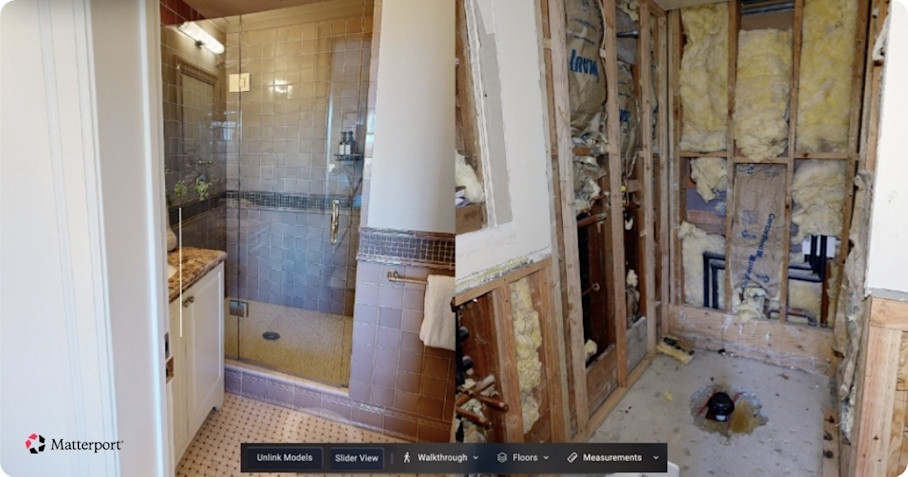
When a deviation appears, it can be documented and resolved before the next trade mobilizes on top of it, avoiding a late-stage change order and major disruption. Every flagged issue should be annotated with a Tag that describes the deviation and links the threaded discussion about how to resolve it.
Milestone captures turn QA/QC from a reactive punch-list exercise into a proactive system that catches problems when they are still inexpensive to fix.
6. Create a repeatable prevention system, not a one-time fix
The strategies should be built into standard operating procedures (SOPs). They work best when they are standardized across projects rather than applied on a case-by-case basis to high-risk projects or revived after a costly change order cycle.
Build a capture-and-review protocol into every project plan so change order prevention becomes a default behavior rather than a special initiative. The following requirements should be defined for every project:
When digital twin captures happen
Who reviews them
What annotations are required
How deviations get escalated
Tracking root causes across the portfolio is equally important. When change order data is aggregated rather than buried in individual project files, patterns emerge that point to systemic improvements. For example:
If MEP clashes drive a significant percentage of changes across a portfolio, that signals a need for better constructability review at the design phase.
If owner-requested changes spike on projects with certain client types, that signals a need for more structured visual sign-off processes during preconstruction.
Identifying those patterns is easier when underlying documentation is consistent enough to make comparisons valid. Teams working from different tools, different capture standards, and different file formats can't draw reliable conclusions from the data they're looking at.
Standardizing on a single visual documentation platform makes portfolio-level analysis actionable. Plus, a digital twin created at preconstruction doesn't expire when the project closes out. It becomes the verified record that the next team inherits. When that practice is consistent across every project in a portfolio, the cumulative effect isn't just fewer change orders. It's an organization that gets harder to surprise.
Power your AEC/DCM workflows with Matterport


